
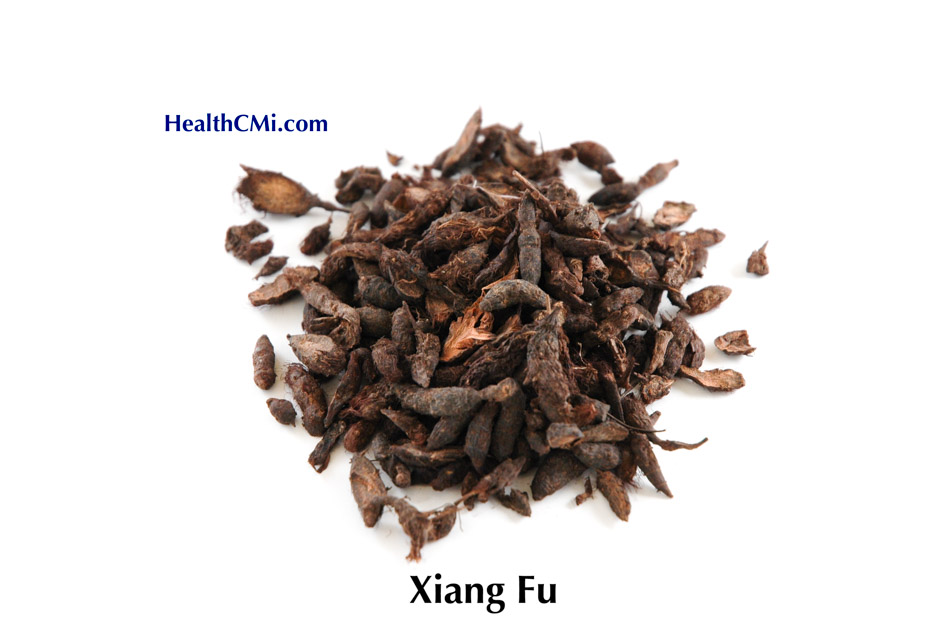
A team at Beijing University of Chinese Medicine has provided physiological evidence that volatile extracts of Méi Guī Huā (Rosa rugosa 玫瑰花), Shí Chāng Pú (Acorus tatarinowii 石菖蒲), and Xiāng Fù (Cyperus rotundus 香附) regulate depressive emotional states through distinct neural and autonomic pathways. The study demonstrates that these aromatic herbs, long valued in Chinese medicine, significantly modulate biosignals and reduce depression risk when delivered as short olfactory interventions [1].
Sixty-six healthy women between 20 and 30 years of age participated in a randomized within-subject study. Each completed four 12-minute sessions: a blank exposure without herbs, followed by separate exposures to Méi Guī Huā (Rosa rugosa 玫瑰花), Shí Chāng Pú (Acorus tatarinowii 石菖蒲), and Xiāng Fù (Cyperus rotundus 香附). Each exposure was separated by a 30-minute washout to allow baseline recovery. Volunteers were screened for normal olfactory function and excluded if they used psychotropic or centrally acting medications [1]. The volatile extracts were prepared as follows:
Oleoresins are thicker, resinous extracts that contain both volatile oils and non-volatile resinous fractions. They differ from distilled essential oils because they preserve more of the plant’s heavier aromatic and pharmacologically active compounds. The study used supercritical CO₂ technology for oleoresins, which captures a broader chemical spectrum than steam distillation. Each extract was supplied in a 10 mL stock volume and used undiluted.
During testing, extracts were administered by passive inhalation in a controlled environment. Participants were seated in a laboratory room maintained at 22 degrees Celcius and 50% relative humidity with filtered air exchange to eliminate background odors. The extract was allowed to diffuse naturally into the room air, and participants inhaled the volatile compounds through normal breathing. Importantly, no mask, nasal cannula, or direct inhaler was used. Instead, the method simulated an aromatherapy exposure environment [1].
Each exposure lasted 12 minutes. Sessions were conducted consecutively on the same day in randomized order, with a 30-minute washout period between exposures to allow physiological signals to return to baseline. Thus, each participant received three single-exposure interventions, one per herb, within the study day [1].
During each session, biosignals were recorded using a 32-channel EEG system and a multiparameter monitor. Measurements included blood pressure, heart rate, pulse rate, respiratory rate, body temperature, and cortical oscillations. Psychological state was assessed using the Symptom Checklist-90. Data were integrated into a logistic regression model to construct an “emotional state scorecard,” which provided a quantifiable evaluation of herbal effects [1].
Among the participants, 11 displayed signs of depression at baseline. Exposure to Xiāng Fù (Cyperus rotundus 香附) improved symptoms in more than half of these cases, while Méi Guī Huā (Rosa rugosa 玫瑰花) prevented depressive risk in nearly two-thirds of otherwise healthy participants. Shí Chāng Pú (Acorus tatarinowii 石菖蒲) showed moderating effects but was less consistent than the other two herbs [1].
At the individual level, one subject improved notably under Xiāng Fù (Cyperus rotundus 香附), and another improved under both Shí Chāng Pú (Acorus tatarinowii 石菖蒲) and Xiāng Fù (Cyperus rotundus 香附). Across the group without depression, 33 of 39 participants showed reduced risk, with Méi Guī Huā (Rosa rugosa 玫瑰花) providing the broadest preventive benefit, followed by Xiāng Fù (Cyperus rotundus 香附) and Shí Chāng Pú (Acorus tatarinowii 石菖蒲) [1].
Distinct physiological signatures were observed for each herb. Méi Guī Huā (Rosa rugosa 玫瑰花) lowered systolic blood pressure, reduced body temperature, and calmed frontal-temporal brain activity, indicating a sympatholytic effect. Shí Chāng Pú (Acorus tatarinowii 石菖蒲) primarily influenced cardiovascular parameters and posterior brain regions, with stronger effects in somatization and obsessive-compulsive states rather than depression. Xiāng Fù (Cyperus rotundus 香附) showed stabilizing effects on both central and peripheral systems, particularly at centro-parietal EEG sites and blood pressure regulation [1].
These outcomes correspond with known pharmacological actions. Méi Guī Huā (Rosa rugosa 玫瑰花) contains citronellol and geraniol, which modulate inhibitory neurotransmission and enhance circulation. Shí Chāng Pú (Acorus tatarinowii 石菖蒲) contains asarones with anti-inflammatory and neuroprotective properties. Xiāng Fù (Cyperus rotundus 香附) contains cyperene and cyperone, compounds linked to sedative and antidepressant activity. Together, these volatiles appear to reduce limbic hyper-reactivity and promote neuroplasticity [1].
The emotional state scorecard enabled precise, individualized evaluation of each intervention. Reductions in biosignal-derived scores reflected either symptomatic improvement or prevention of depressive risk. For depression, the model demonstrated both high sensitivity and specificity, confirming the robustness of the biosignal approach [1].
This framework allows practitioners to move beyond subjective descriptions of aromatherapy and track objective changes. Importantly, it highlights differential clinical utility: Méi Guī Huā (Rosa rugosa 玫瑰花) for prevention, Xiāng Fù (Cyperus rotundus 香附) for corrective treatment, and Shí Chāng Pú (Acorus tatarinowii 石菖蒲) for supportive modulation in related states [1].
The study underscores the potential of volatile herbal extracts as measurable interventions for depression. By combining biosignal monitoring with data-driven modeling, it translates the classical Chinese medicine concept of “opening the orifices” into quantifiable neurophysiological evidence. For acupuncturists providing acupuncture and Chinese herbal medicines as well as integrative practitioners, these findings provide a framework for evidence-based application of aromatic herbs in emotional regulation. [1].
Source
1. Hui Wang, Dan Qin, Xinjie Shi, Menghan Fan, Wenyan Li, and Yun Wang. “Regulation of Emotional States by Volatile Herbal Extracts: Multisystem Physiological Evidence from Rosa rugosa, Acorus tatarinowii, and Cyperus rotundus.” Complementary Therapies in Medicine 93 (2025): 103218.
{loadposition cta204}
