
A large multi-site randomized clinical trial has demonstrated that acupuncture provides sustained and clinically meaningful improvements in chronic low back pain (CLBP) among older adults. The study enrolled 800 participants aged 65 years and older across Kaiser Permanente Washington, Kaiser Permanente Northern California, Sutter Health, and the Institute for Family Health in New York City, all of whom reported low back pain lasting at least three months with associated disability [1].
Learn more about acupuncture for the treatment of low back pain in the acupuncture continuing education CEU online course entitled: Low Back Pain >
Participants were randomized into three arms: usual medical care (UMC), standard acupuncture (SA), and enhanced acupuncture (EA). The SA protocol consisted of eight to fifteen treatments administered over twelve weeks, while EA added four to six maintenance sessions delivered during the following twelve weeks. All treatments were performed by licensed community-based acupuncturists and were limited to manual needling only.
The funder required exclusion of electroacupuncture, moxibustion, cupping, and other adjunctive methods in order to simplify and standardize the acupuncture intervention, aligning it with potential U.S. Medicare reimbursement parameters and exclusions, since additional therapeutic modalities could necessitate separate fees [1]. The Centers for Medicare & Medicaid Services (CMS) authorized Medicare coverage of acupuncture for beneficiaries with chronic low back pain. Coverage allows up to 12 sessions within a 90-day period, with an additional 8 sessions permitted if the patient shows improvement. The maximum benefit is limited to 20 treatments per year, and care must be discontinued if the patient fails to improve or shows signs of regression.
The Roland-Morris Disability Questionnaire (RMDQ) served as the primary outcome measure, with follow-up assessments conducted at three, six, and twelve months. At the six-month primary time point, both acupuncture groups showed significantly greater reductions in disability compared with UMC. These benefits were sustained at twelve months. When combining both acupuncture groups, improvements in disability scores compared to UMC were statistically significant at all three follow-up points. Clinically meaningful improvement, defined as at least a thirty percent reduction in RMDQ scores, was achieved by 39.1 percent of patients in the SA group and 43.8 percent of patients in the EA group compared with 29.4 percent of patients receiving UMC at six months. This advantage persisted at twelve months, with 37.7 percent of SA and 43.8 percent of EA participants continuing to show clinically significant improvement compared with 28.4 percent in UMC [1].
Baseline characteristics reflected a population typical of older adults with chronic low back pain CLBP. The mean age was 73.6 years, with 62 percent female participation. Forty-one percent of participants were aged 75 or older, nearly half met criteria for high-impact chronic pain, and more than two-thirds reported radicular symptoms consistent with sciatica. Most participants also had multiple musculoskeletal pain conditions, averaging 1.7 concurrent diagnoses per patient. At study entry, the mean RMDQ score was 13.2, consistent with moderate disability. Only 3.8 percent were on long-term opioid therapy, reflecting an emphasis on nonpharmacologic pain management in this population [1].
Treatment fidelity was high, with more than 80 percent of acupuncture participants completing at least eight sessions, the minimum therapeutic threshold for the standard phase. Among those randomized to EA, nearly 79 percent completed four or more maintenance treatments. Fifty-five licensed acupuncturists delivered care across the four systems, most of whom treated between four and fifteen patients. Adherence and patient engagement were robust despite the challenges of conducting in-person trials during the COVID-19 pandemic [1].
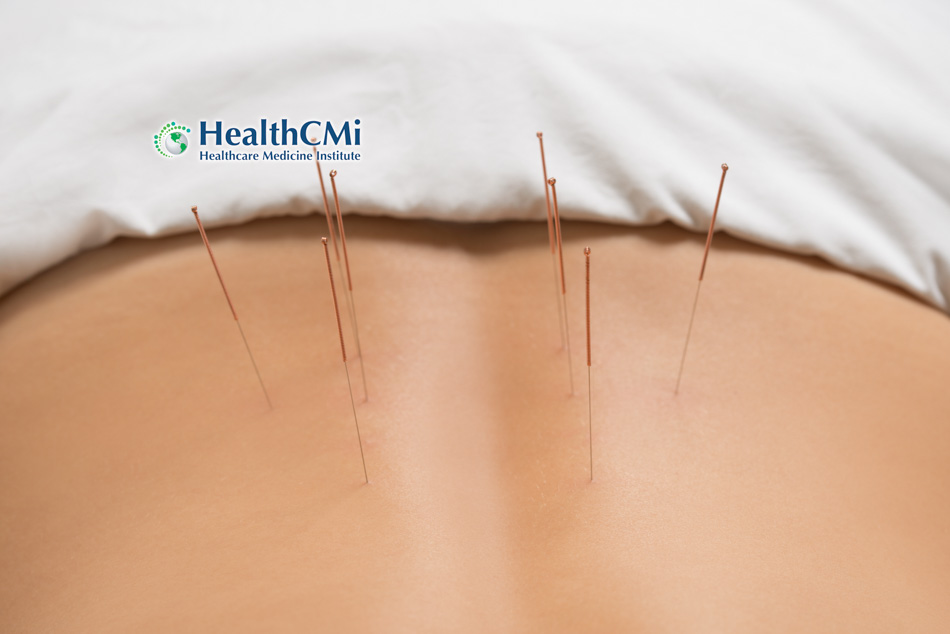
Acupuncturists employed individualized manual needling strategies consistent with traditional East-Asian acupuncture while restricted from using adjunctive modalities. Treatments typically involved the insertion of 10 to 20 sterile stainless steel needles ranging from 0.25 to 0.30 mm in diameter, with insertion depths between 10 and 30 mm depending on point location and patient constitution. Depth was modified to account for age-related tissue changes and patient size. Manual stimulation was applied to elicit deqi, but no electrical stimulation was permitted. Each session lasted approximately 25 to 30 minutes and treatments were delivered one to two times per week during the twelve-week initiation phase. Point selection commonly included bilateral lumbar and lower extremity points, supplemented by distal points individualized to patient presentation. The pragmatic nature of the trial allowed for clinical flexibility while maintaining treatment fidelity across more than fifty practitioners [1].
Secondary outcomes further reinforced the benefit of acupuncture. Pain intensity, measured by the PEG scale, showed a relative advantage for EA over SA at six months, with a −0.5 adjusted mean difference in pain intensity favoring enhanced care. Patient Global Impression of Change scores also favored EA at six months. Improvements in physical and social functioning were observed at three months in the combined acupuncture groups compared with UMC. Anxiety symptoms were reduced in both acupuncture groups at six and twelve months, while depression outcomes demonstrated small improvements [1]. Minor adverse events such as local pain or bruising at needling sites occurred in fewer than ten percent of participants, consistent with established safety data for acupuncture [1].
The trial provides compelling evidence that acupuncture is both effective and safe for the management of CLBP in older adults. The improvements in disability and pain intensity achieved by acupuncture compare favorably with pharmacologic and interventional approaches, yet without the risks of polypharmacy, opioid dependence, or invasive procedures [1].
As CLBP remains the leading cause of disability worldwide and generates over $134 billion annually in U.S. health expenditures, the findings of this trial support acupuncture as a first-line treatment and provide critical evidence to justify its inclusion as a Medicare-reimbursable service for older adults [1].
Source:
1. Lynn L. DeBar et al., “Acupuncture for Chronic Low Back Pain in Older Adults: A Randomized Clinical Trial,” JAMA Network Open 8, no. 9 (September 12, 2025).
{loadposition cta204}
