
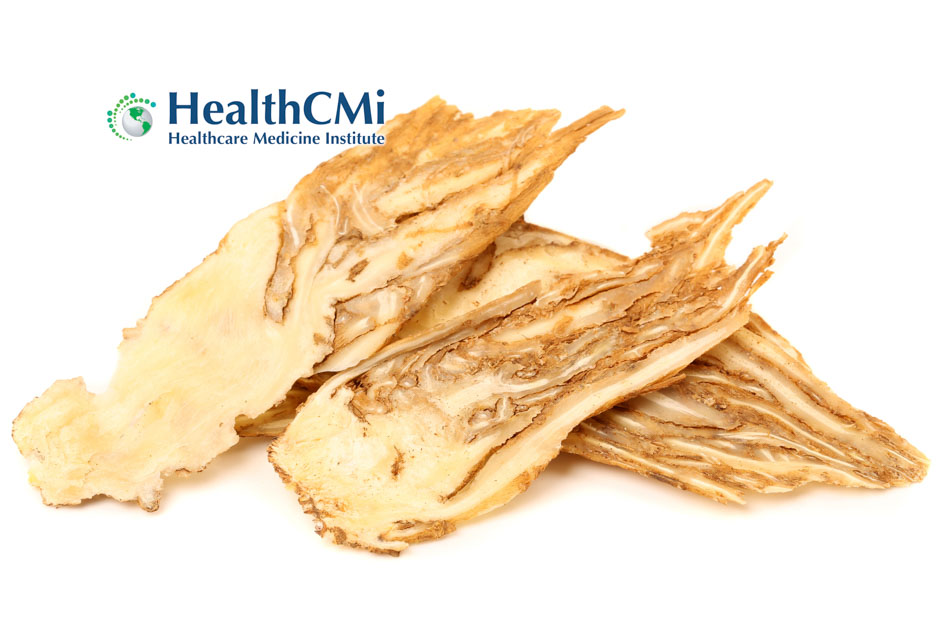
Researchers identified multiple bioactive compounds and molecular targets through which Si Miao Yong An Tang (Four-Valiant Decoction for Well Being, 四妙勇安汤) promotes healing of diabetic foot ulcers (DFU). The study applied network pharmacology and molecular docking to clarify how this classical formula exerts anti-inflammatory, pro-angiogenic, and tissue-repair effects across interconnected signaling pathways. [1]
The herbal decoction, first recorded by Sun Simiao during the Tang dynasty, contains Jin Yin Hua (金银花), Xuan Shen (玄参), Dang Gui (当归), and Gan Cao (甘草). It is traditionally used to clear heat, resolve toxicity, move blood, nourish yin, and alleviate pain. The formula has now been biochemically validated for these effects. [1] Researchers from the Department of Pharmacy at Chongqing Hospital of Traditional Chinese Medicine and Chongqing Medical University identified a total of 165 active ingredients and 520 potential targets, demonstrating the multi-component and multi-target nature of Si Miao Yong An Tang in diabetic foot ulcer regulation. [1]
Although the study was done using computer models rather than patients, the results support what doctors have seen in real clinics—fewer infections, less pus, and faster healing when this herbal formula is used for diabetic foot ulcers. [1] The herbs reduce IL-1β and TNF-α, which are proinflammatory cytokines that cause swelling and tissue damage, while increasing VEGF, a natural protein that helps new blood vessels grow, and activating the PI3K/AKT pathway, which supports cell growth and repair. [1] These actions help explain the formula’s strong record of improving diabetic wound healing in hospitals across China.
Si Miao Yong An Tang is indicated for the treatment of fire toxins leading to blood stasis in the sinews and blood vessels. This formula is used for patients presenting with ulcerated, non-healing sores. The sores are often on dark-red, slightly swollen limbs that may feel warm to the touch, often accompanied by a foul odor, necrosis of the fingers or toes with purulent abscesses, extreme pain, local inflammation, copious pus discharge, a burning sensation, fever, and thirst. The tongue is red with a normal coating and the pulse is rapid. Conditions often treated with Si Miao Yong An Tang include acute thrombotic phlebitis, thromboangiitis obliterans, iliofemoral vein thrombosis, chronic and viral hepatitis, sciatica, carpal tunnel syndrome, erysipelas, radiodermatitis, thrombophlebitis, sloughing ulcers, gangrene (including arteriosclerotic gangrene), chronic gastritis, benign prostatic hypertrophy, gout, varicose veins of the lower limbs, vascular bi syndrome, cirrhosis of the liver, and erythema nodosum.
Gene Ontology and KEGG analyses demonstrated 143 overlapping targets between diabetic foot ulcer pathology and Si Miao Yong An Tang compounds, representing 365 biological processes and 54 molecular functions. [1] The pathways primarily regulated nitric oxide synthesis, oxidative stress, and protein kinase activity—biomedical correlates of the traditional principles of “activating blood,” “resolving toxin,” and “nourishing vessels.” The study also found modulation of the fluid shear stress and atherosclerosis pathways, indicating improved vascular integrity and perfusion in ischemic regions. [1]
The Chongqing researchers concluded that Si Miao Yong An Tang operates through a “multi-component, multi-target, multi-pathway” mechanism involving PI3K/AKT, AGE-RAGE, NF-κB, and VEGF signaling. [1] Through suppression of chronic inflammation, stimulation of angiogenesis, and promotion of epithelial regeneration, the formula demonstrates measurable biochemical validity for treating diabetic ulcers. For licensed acupuncturists, the data highlight the clinical value of combining herbal and acupuncture-based vascular therapies, as both approaches converge on similar molecular pathways—particularly those that activate PI3K/AKT and VEGF signaling—leading to improved tissue healing outcomes. [1]
The main active ingredients in the herbal formula are quercetin, apigenin, kaempferol, luteolin, and loniflavone. These natural compounds showed strong connections with several proteins involved in diabetic foot ulcers (e.g. PIK3CA, JUN, IL-1β, AKT1, PLAU). [1]
The formula was shown to calm key biological pathways that drive diabetic wound problems. It blocked the AGE-RAGE signaling pathway, which causes inflammation and blood-vessel injury in diabetes, helping to lower inflammatory messengers such as IL-6, TNF-α, and IL-1β. Quercetin and luteolin in particular may interrupt this damaging cycle and reduce oxidative stress. [1] The AGE–RAGE signaling pathway refers to the biological process where advanced glycation end products (AGEs)—harmful compounds formed when sugars bind to proteins or fats—attach to their cell receptor called RAGE (receptor for advanced glycation end products). This interaction triggers inflammation, oxidative stress, and tissue damage, contributing to diabetic complications such as vascular injury, slow wound healing, and neuropathy.
The herbs also supported the PI3K/AKT and VEGF pathways, which are important for new blood-vessel growth and tissue repair. Loniflavone helped stabilize proteins that turn on these healing signals, increasing VEGF levels and improving blood and oxygen flow to the wound. [1]
Other targets, such as ITGB3 and EGFR, help reduce inflammation and promote skin repair. Together, these effects explain why the formula often leads to faster healing and better wound closure in people with diabetic foot ulcers. [1] Among the herbal compounds, quercetin ranked highest in importance, followed by apigenin, kaempferol, luteolin, and loniflavone, all of which help control inflammation and support tissue recovery. [1–4]
Although this study used computer models rather than live patients, its findings match clinical reports of fewer infections, less discharge, and faster wound healing when the formula is used for diabetic foot ulcers. [1] The herbs lower IL-1β and TNF-α (inflammatory chemicals that cause swelling and tissue damage) while boosting VEGF and the PI3K/AKT pathway, which help grow new blood vessels and repair tissue. [1]
References:
[1] Qin X., Luo X., Qin Y., Tang X., Yang M. “Exploring the mechanism of Si Miao Yong An Tang in the treatment of diabetic foot ulcers based on network pharmacology and molecular docking.” Letters in Drug Design & Discovery (2025). DOI: 10.1016/j.lddd.2025.100143.
[2] Chen P., Shi Q., Xu X., Wang Y., Chen W., Wang H. International Journal of Molecular Medicine 30, no. 1 (2012): 119–125.
[3] Miao L., Liu Y., Wang Y., Sun H. Food Frontiers 4, no. 2 (2023): 309–321.
[4] Fu J., Huang J., Lin M., Xie T., You T. Journal of Surgical Research 246 (2020): 213–223.
[5] Wang J., Zhao X., Tian G., Liu X., Gui C., Xu L. Diabetes Metabolic Syndrome and Obesity 15 (2022): 3597–3609.
[6] Chen L., Cui Y., Li B., et al. American Journal of Physiology – Heart and Circulatory Physiology 317 (2019): H933–H944.
[7] Wei Z., Dong M., Pan D., et al. Vascular Investigation and Therapy 5, no. 1 (2022): 10–17.
